

Breakfast on Main Street: A Catalyst for Local Business Growth
Breakfast is not just a meal; it is the cornerstone of economic activity on Main Street, where the aroma of fresh coffee and baked goods beckons locals and tourists alike. The importance of breakfast extends beyond individual satisfaction; it plays a crucial role in driving foot traffic to local businesses, setting the tone for the day’s commerce. This period of the morning is often when communities gather, share stories, and engage in social interactions that foster relationships, both personal and commercial. For business owners, capitalizing on breakfast can be a powerful strategy to enhance visibility and attract more customers. Establishments that serve breakfast can see a marked increase in patronage, as people enjoy the kind of neighborhood dining experience that builds loyalty and keeps them coming back. This article will explore how breakfast can be a game changer for Main Street businesses, highlighting unique offerings and strategies that can elevate the morning dining scene. To discover delightful breakfast options that enhance this experience, explore the delights at Dimaniyat Cafe. In addition, we’ll look at successful case studies of breakfast spots that have become hubs of morning activity on Main Street.
The Benefits of Breakfast Options for Cafes and Restaurants
Breakfast is often touted as the most important meal of the day, and for cafes and restaurants, offering a breakfast menu presents numerous benefits that can significantly enhance business performance. From attracting a steady flow of early customers to boosting revenue and cultivating community ties, the advantages are manifold.
Attracting Early Customers
One of the primary benefits of adding breakfast options is the ability to attract early customers. Many cafes that introduce morning menus report a marked increase in foot traffic. For example, The Morning Bell in Austin, Texas, experienced a 35% boost in morning visitors after launching a seasonal breakfast menu featuring locally sourced ingredients. This trend isn’t just limited to Austin; Silo Coffee in London built a loyal following by serving creative breakfast items that reflect modern dietary preferences, like avocado toast topped with poached eggs. By offering unique and Instagrammable options, these establishments effectively harness social media buzz to draw in patrons early in the day, which is a crucial time for maximizing revenue and visibility.
Increasing Revenue
Breakfast menus can be a significant driver of revenue for cafes and restaurants. The National Restaurant Association reported that breakfast-focused businesses grow 18% faster than those that do not emphasize morning meals. Breakfast items often carry higher profit margins compared to lunch or dinner offerings, allowing cafes to capitalize on this meal segment. For instance, Brew & Co. in Portland tripled its average ticket size with innovative breakfast platters. Additionally, the opportunity to upsell-pairing coffee with breakfast sandwiches, for example-can further enhance profits.
Fostering Community Relations
Offering breakfast isn’t just about profits; it’s also about fostering community engagement. Cafes that emphasize these early hours often become gathering spots for local residents, networking groups, and business meetings. Establishments like Dimaniyat Cafe offer optimal environments for conversations, which can be beneficial for community relationships and networking (learn more about our offerings). In fact, many small businesses leverage breakfast networking opportunities, showcasing their spaces as ideal for informal gatherings or meetings, which can help build a supportive local economy.
Conclusion
In summary, offering breakfast options presents a viable strategy for cafes and restaurants aiming to attract early customers, increase revenue, and foster community connections. As the demand for diverse, unique breakfast offerings continues to grow, businesses that adapt and innovate their breakfast menus will likely excel in today’s competitive dining landscape. By doing so, they not only cater to the hunger of early risers but also set the stage for greater long-term success.
Trending Breakfast Items for Local Menus
As a business owner looking to enhance your breakfast menu, including trending items that cater to universal tastes can attract more customers. Here’s a list of popular breakfast items you might consider adding:
- Avocado Toast
A staple in many cafes, often topped with poached eggs or tomatoes. - Greek Yogurt Parfait
Layered with granola and fresh fruit, a healthy and filling option. - Smoothie Bowls
Packed with fruits, nuts, and seeds, customizable for health trends. - Breakfast Sandwiches
Incorporating plant-based options, growing in popularity. - Overnight Oats
Allows for various toppings and flavors for an easy grab-and-go. - Miso Soup with Rice
Popular in Japanese cuisine, offering a comforting, warming option. - Korean Kimchi Fried Rice
A unique savory alternative that’s gaining traction. - Crepes
Versatile for sweet or savory fillings. - Eggs Benedict
A classic favorite for brunch lovers. - Sourdough Pancakes
Rising in popularity for their distinct flavor.
These items not only offer variety but also appeal to health-conscious consumers. Explore more breakfast delights here for additional ideas.
Comparing Breakfast Business Models: Food Truck, Cafe, and Bakery
When considering various breakfast business models, it’s essential to understand the nuances of each in terms of costs, target audience, operational needs, and advantages. Below is a table that highlights these key differences and advantages:
| Feature | Food Truck | Cafe | Bakery |
|---|---|---|---|
| Startup Costs (Estimated, USD) | $50,000 – $150,000 (includes truck purchase/lease, kitchen equipment, permits) Source: U.S. Small Business Administration, 2023 |
$150,000 – $500,000 (includes rent/lease, build-out, equipment, licenses) Source: National Restaurant Association, 2024 Industry Report |
$75,000 – $300,000 (includes equipment, lease, renovations, initial inventory) Source: NRA, 2024 Industry Report |
| Target Audience | Commuters, office workers, event attendees, urban professionals, students Source: NRA, 2024 Consumer Trends Report |
Local residents, remote workers, students, casual diners, coffee enthusiasts Source: SBA, 2023 Small Business Demographics |
Families, weekend shoppers, gift buyers, regular customers seeking fresh pastries and breads Source: NRA, 2024 Consumer Trends Report |
| Operational Needs | Mobile operation, permit compliance (local health & zoning), parking availability, limited storage, high turnover of ingredients Source: SBA, 2023 Food Service Guidance |
Fixed location, commercial kitchen, seating area, staff scheduling, consistent supply chain, POS system Source: NRA, 2024 Operations Benchmarking Study |
Dedicated kitchen space, long baking hours, inventory management for perishables, display cases, delivery logistics Source: NRA, 2024 Operations Benchmarking Study |
| Key Advantages | Lower startup cost, high mobility for market testing, lower overhead, strong brand visibility at events Source: SBA, 2023 Food Truck Success Stories |
Consistent customer base, higher average ticket price, ability to host events, stronger community presence Source: NRA, 2024 Profitability Analysis |
High-profit margin on baked goods (60-70%), repeat customers, potential for wholesale distribution, product differentiation Source: NRA, 2024 Margin & Pricing Report |
Visual Representation of Startup Costs
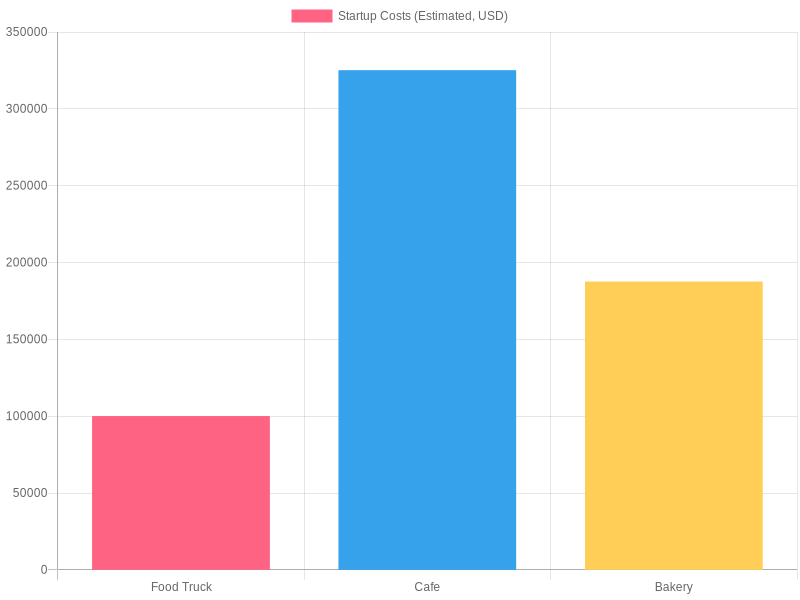
Startup Costs Comparison for Food Truck, Cafe, and Bakery
This overview provides a solid foundation for breakfast entrepreneurs looking to pick the best business model according to their goals and market conditions. Each model has its unique advantages, and understanding these can lead to better strategic decisions in starting and managing a breakfast business.
Effective Promotional Strategies for Breakfast Offerings
To effectively promote breakfast offerings, business owners should explore a blend of traditional and contemporary strategies tailored to their target audience’s preferences. Social Media Engagement plays a pivotal role. Restaurants can harness platforms like Instagram and TikTok to showcase visually appealing images and videos of their breakfast specials. Creating engaging content around breakfast themes such as “Morning Rituals” or highlighting unique menu items can draw attention and spur engagement. Tips from experts emphasize the importance of timing the posts to coincide with peak breakfast hours, ideally between 7 AM to 9 AM, when potential customers are making plans for their meals (source). Using hashtags effectively can also enhance visibility and attract local diners.
Community engagement is another powerful strategy. Hosting breakfast events or local networking sessions can encourage participation and enhance visibility within the neighborhood. Collaborating with local businesses to sponsor a breakfast club or wellness workshops can foster community relationships and draw in new customers. This synergistic approach not only supports local economies but also enriches the business’s profile as a community hub (source).
Moreover, establishing partnerships with food delivery services or local influencers can amplify outreach efforts. Consider offering exclusive online deals through platforms like DoorDash or UberEats, where limited-time breakfast specials might entice users to try new items. By combining digital outreach with local engagement, businesses can create a cohesive strategy to boost breakfast sales, ensuring they capture the morning crowd effectively.
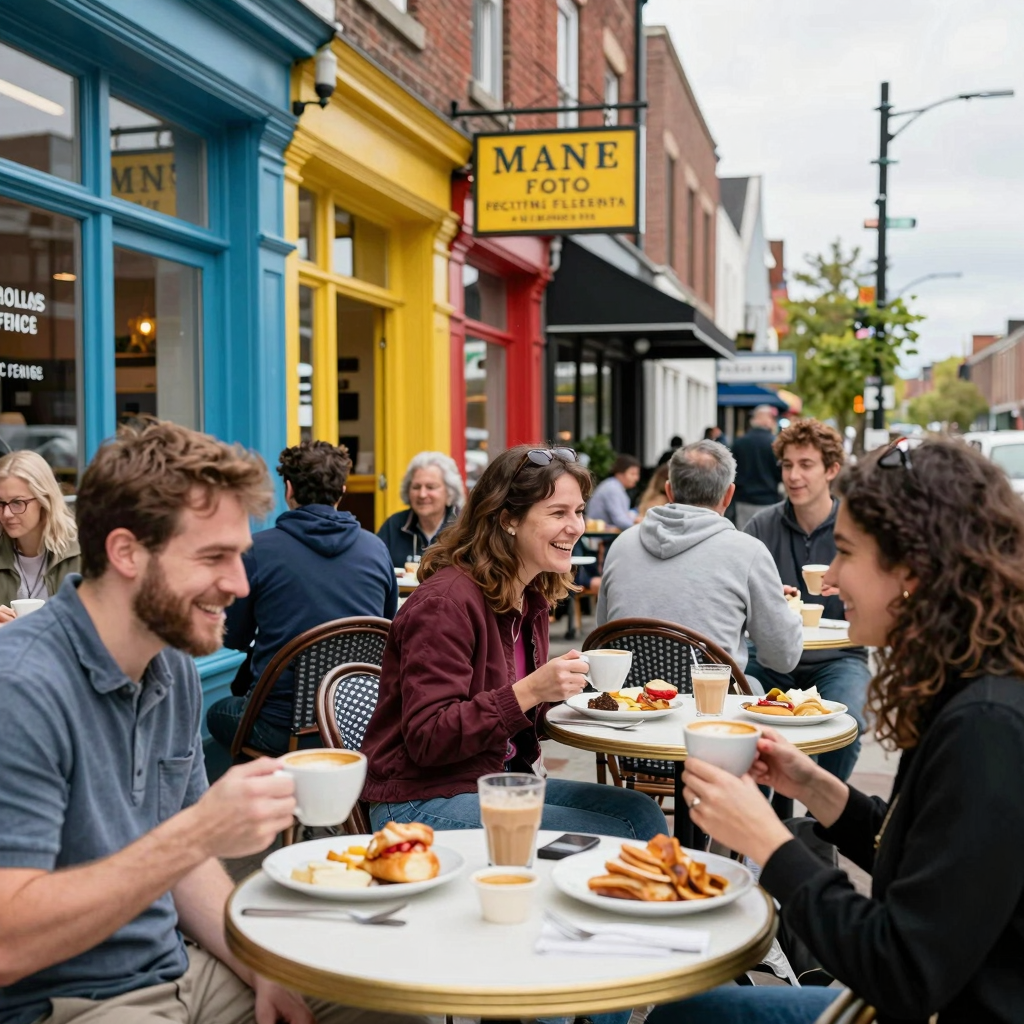
User Demographics for Breakfast Consumers
Understanding the demographics of breakfast consumers is crucial for effective marketing strategies, especially for business owners in the food and beverage industry. Recent studies present a clear picture of who eats breakfast, their habits, and preferences:
Age Groups and Eating Habits
- Children (2-5 years): Nearly all children in this age group eat breakfast. Common foods include milk, cereals, and fruit.
- Children (6-11 years): Breakfast consumption remains high. They typically favor cereals, bread, and eggs.
- Teenagers (12-19 years): This group shows a moderate to low frequency of breakfast eating, with fast food and sugary cereals being popular choices.
- Young Adults (20-34 years): This demographic prioritizes convenience highly (approximately 86.3%) and often opts for on-the-go options, delivery meals, and smoothies.
- Adults (35-64 years): Breakfast habits are moderate to high, leaning towards traditional cooked meals like eggs and oatmeal.
- Seniors (65+ years): Older adults maintain a consistent breakfast routine, favoring simple, familiar foods.
Food Preferences and Trends
- Convenience Over Nutrition: A significant 86.3% of young adults value convenience over nutrition. Conversely, parents preparing breakfast for children focus on nutritional value.
- Popular Foods: Foods such as smoothies, toast, fruit, and eggs dominate the breakfast landscape among various age groups.
- Diversity in Choices: While younger consumers lean towards fast and processed options, older individuals prefer home-cooked meals or traditional breakfast items.
With this knowledge, cafe owners can tailor their offerings to better match the needs and preferences of their target demographics. For insights on the culinary trends at local cafes, explore the delights at Dimaniyat Cafe.
Visual Representation
Here’s a visual representation of breakfast preferences across age groups:

“Breakfast is not just a meal; it’s a vital aspect of any restaurant’s success. It offers a steady flow of customers and increases brand loyalty, making it essential for growth in today’s competitive market.”
–Expert Restaurant Owner
As breakfast continues to be a crucial part of many people’s daily routines, business owners should recognize its potential in driving overall success. By offering quality breakfast options, you can tap into a reliable source of revenue that supports your restaurant’s longevity and growth. For insights on how to enhance breakfast offerings, check out our breakfast strategies.

Conclusion
In conclusion, the vitality of breakfast on Main Street cannot be overstated, especially for business owners aiming to enhance customer engagement and profitability. We discussed the increasing consumer demand for diverse and healthy breakfast options, with a significant rise in plant-based menu items. According to the National Restaurant Association’s 2023 industry report, 68% of consumers are more inclined to choose cafes that offer at least one plant-based breakfast dish. Additionally, the demand for globally-inspired flavors and clean-label ingredients is reshaping breakfast menus, providing business owners an opportunity to innovate.
The importance of breakfast extends beyond mere consumption; it sets the tone for the day and can significantly influence customers’ perception of a business. By implementing or enhancing breakfast offerings, cafes on Main Street can not only attract more foot traffic but also foster community engagement through shared culinary experiences. As seen in recent trends, convenience in the form of grab-and-go options continues to gain traction, with such offerings increasing in sales by 22% year-over-year.
Therefore, it is essential for business owners to reconsider their breakfast strategies, not just as a meal option but as a crucial element for creating a bustling, attractive environment that keeps customers returning for more. Embracing these trends can ultimately set your cafe apart, driving both growth and community participation.
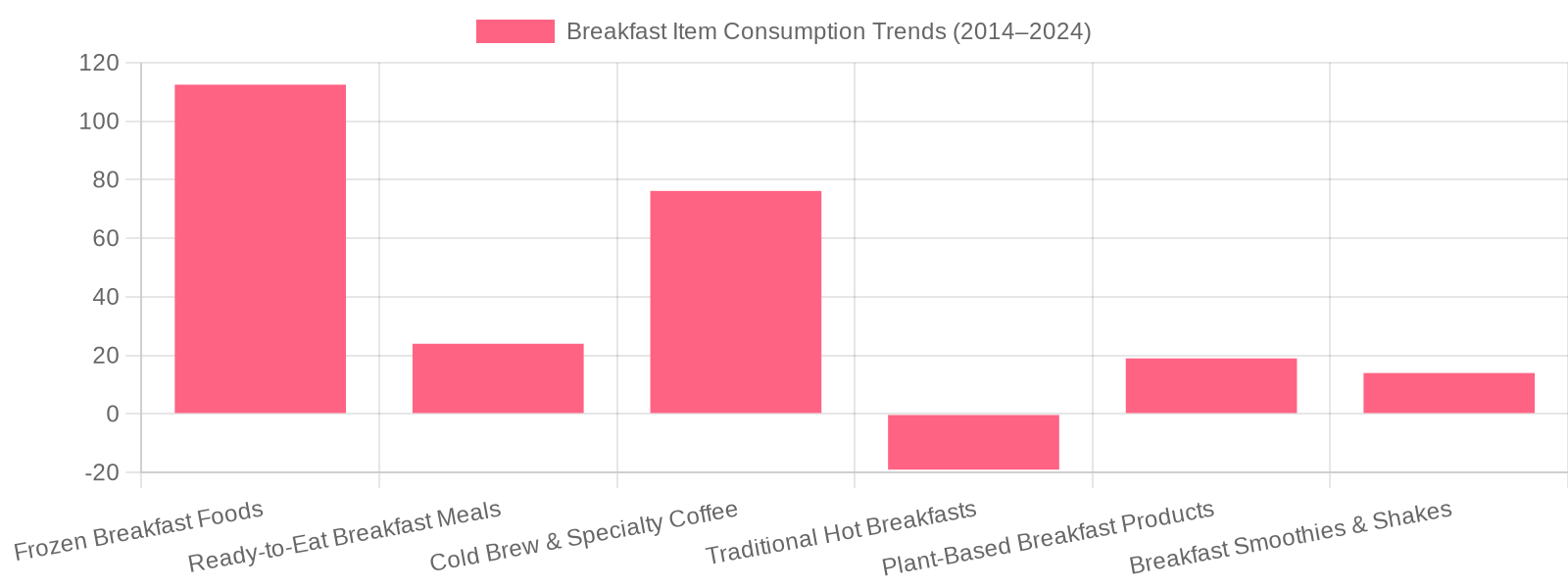
Breakfast Consumption Trends Over the Past Decade
The chart below illustrates the significant changes in breakfast item consumption trends from 2014 to 2024. With a notable shift towards convenience and health-focused options, business owners should take heed of these evolving preferences to adapt their offerings accordingly.
| Category | 2014 | 2024 | Change (%) | Key Trend Drivers |
|---|---|---|---|---|
| Frozen Breakfast Foods Market Value | $3.2 billion | $6.8 billion | +112.5% | Demand for ready-to-eat, nutritious options; busy lifestyles |
| Ready-to-Eat (RTE) Breakfast Meals (e.g., oatmeal cups, protein bars) | 18% of breakfast consumers | 42% of breakfast consumers | +24 percentage points | Health-conscious choices; portability; time-saving |
| Cold Brew & Specialty Coffee Consumption (per capita) | 2.1 cups/week | 3.7 cups/week | +76.2% | Premiumization; health benefits (lower acidity); social media trends |
| Traditional Hot Breakfasts (e.g., eggs, bacon, pancakes) | 58% of breakfast meals | 39% of breakfast meals | -19 percentage points | Declining household preparation time; shift to on-the-go eating |
| Plant-Based Breakfast Products (e.g., oat milk, tofu scrambles) | 12% of breakfast purchases | 31% of breakfast purchases | +19 percentage points | Environmental concerns; dietary preferences (vegan, flexitarian) |
| Breakfast Smoothies & Shakes (purchased pre-made) | 9% of breakfasts | 23% of breakfasts | +14 percentage points | High-protein, nutrient-dense profiles; perceived health benefits |
Source Data:
- Statista (2024), “Frozen Breakfast Foods Market in the US”
- NielsenIQ Consumer Insights Report (2024), “U.S. Breakfast Habits & Purchasing Behavior”
- Euromonitor International (2024), “Global Coffee Trends & Consumption Patterns”
- Mintel Market Research (2024), “Plant-Based Food Adoption in the Morning Meal Segment”
For more insights into breakfast trends and how they impact your business, check out Exploring the Delights of Dimaniyat Cafe and Top 10 Breakfast Spots for Business Networking.