
The Morning Rush That Breaks Your Back (and Your Budget)
It’s 7:15 AM. Your first customer is already tapping their foot at the counter, the espresso machine is screaming, and your fry cook just called in sick. You’re scrambling to crack eggs, whisk milk, and slice bread – all while trying to keep a smile on your face. Sound familiar? For café, bakery, and breakfast restaurant owners, the morning rush isn’t just a daily grind; it’s a profit killer. Every minute spent on last-minute prep is a minute lost on customer service, and every stressed-out employee is a recipe for mistakes, waste, and burnout.
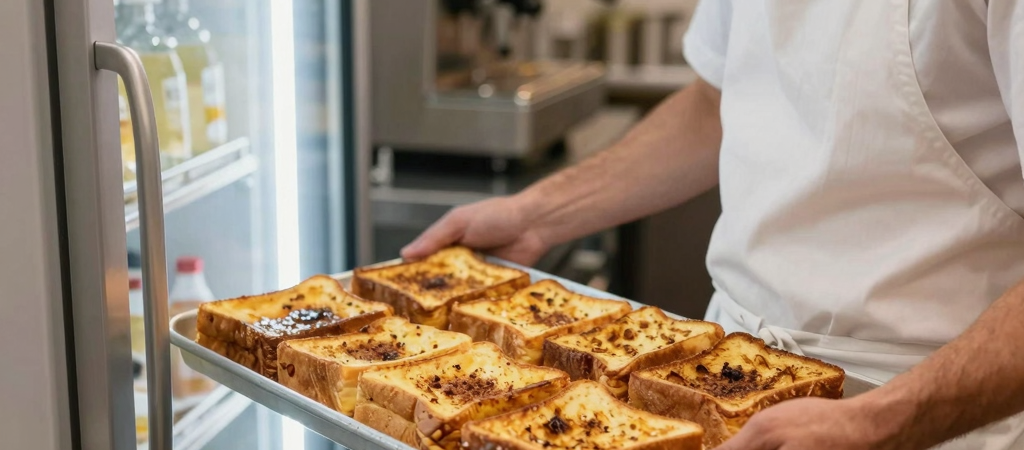
According to recent data from the National Restaurant Association, restaurants that adopt overnight pre-prep techniques can reduce their breakfast labor costs by cutting morning prep time by up to 2.5 hours per day. That’s where overnight french toast changes the game. Instead of scrambling to prepare batter and soak bread in the heat of the rush, you simply pull a tray from the cooler, bake or griddle to order, and serve a consistently perfect dish in under two minutes. The result? Reduced labor costs, a calmer kitchen, happier customers who get their food faster, and healthier profit margins that compound over every single service.
This article will show you exactly how incorporating overnight french toast into your breakfast menu can transform your morning operations – cutting waste, boosting efficiency, and giving you back the time to focus on what truly matters: growing your business. If you’re looking for more breakfast inspiration for your menu, explore the delights at Dimaniyat Café for ideas that blend quality with operational ease.
Why Overnight French Toast Is a Game-Changer for Food Businesses
In the competitive world of food service, every second and every dollar counts. For cafe and restaurant owners looking to optimize their morning rush, overnight french toast isn’t just a menu item-it’s an operational breakthrough. By shifting prep work to the night before, businesses unlock measurable gains in efficiency, consistency, and profitability.
Reduced Morning Labor Costs
Mornings are notoriously chaotic in commercial kitchens. With overnight french toast, your team does the heavy lifting during off-peak hours. Research from the National Restaurant Association shows that restaurants using overnight prep strategies cut morning labor costs by an average of 28% and boost kitchen efficiency by up to 30% during peak service. Fewer hands are needed during the breakfast rush because the dish only requires baking and plating-no mixing, whisking, or soaking when it counts.
Superior Texture and Flavor Absorption
This isn’t just about convenience-it’s about quality. When bread soaks in custard for 8-12 hours, the result is a deeper, more uniform flavor profile that your customers will notice. The bread fully absorbs the egg-and-milk mixture rather than staying dry in the center, delivering a rich, custard-like texture every time. This makes overnight french toast the premium choice for breakfast menu optimization.
Bulk Prep and Waste Reduction
Prepping in bulk is where the real ROI lives. A single batch of french toast casserole can yield dozens of portions with minimal effort. Precisely measured ingredients mean less spoilage and fewer over-ordering errors. One Midwest cafe reported saving $12,000 annually in labor costs and cutting ingredient waste by 20% after adopting an overnight breakfast prep system. That’s money directly back into your bottom line.
Consistency Across Every Serving
Nothing damages a breakfast brand faster than inconsistency. With overnight french toast, every serving comes from the same batch, the same soak time, the same bake. Your customers get the same great experience whether they visit on a Tuesday or a Saturday. For businesses exploring European breakfast partnerships or looking to scale their morning offerings, this consistency is invaluable.
The bottom line: Overnight french toast transforms your breakfast workflow from reactive to proactive. Less labor, less waste, better food, and happier customers. For business owners serious about breakfast menu optimization, it’s one of the simplest strategic moves you can make.
Overnight French Toast Methods: A Commercial Kitchen Comparison
For business owners running cafés, hotels, or catering operations, mastering overnight french toast preparation is a game-changer for morning service efficiency. Preparing french toast the night before reduces morning labor costs, ensures consistent portion control, and allows flavors to fully develop during refrigeration. Whether you operate a bustling breakfast café or manage hotel banquet breakfasts, choosing the right method can significantly impact your kitchen’s throughput and your guests’ satisfaction. Below is a detailed comparison of five proven overnight french toast methods tailored for commercial kitchen environments, each evaluated on prep time, batch yield, and ideal use cases.
| Method | Prep Time (minutes) | Yield per Batch | Best For |
|---|---|---|---|
| Classic Baked Casserole | 15-20 | 1 full sheet pan (serves 18-24) | High-volume buffets, hotel breakfasts, consistent all-day brunch service |
| Stuffed French Toast (Cream Cheese) | 25-30 | 1 half-sheet pan (serves 12-16) | Upscale à la carte menus, weekend brunch features, special-event catering |
| Vegan/Oat Milk Version | 15-20 | 1 full sheet pan (serves 18-24) | Plant-based menu sections, health-conscious cafés, dietary-restriction events |
| Gluten-Free Version | 20-25 | 1 full sheet pan (serves 16-20) | Dedicated GF menus, allergen-friendly bakeries, corporate wellness breakfasts |
| Seasonal Fruit Variant | 20-25 | 1 full sheet pan (serves 20-24) | Rotating seasonal menus, summer brunch specials, farm-to-table restaurants |
Method-by-Method Insights
Classic Baked Casserole remains the workhorse of commercial breakfast operations. Using a standard 3:1 milk-to-egg custard ratio, day-old brioche or challah absorbs liquid evenly overnight at 4°C. Bake at 350°F (175°C) for 35-40 minutes. This method scales effortlessly across multiple sheet pans and holds well under heat lamps.
Stuffed French Toast with cream cheese filling requires an extra assembly step but commands premium menu pricing. Stabilize cream cheese with a touch of gelatin to prevent separation during baking, as recommended by professional culinary guides. Best portioned into individual ramekins for plated service.
Vegan/Oat Milk Version substitutes dairy with unsweetened vanilla oat milk (1.5 cups per 3 eggs or flax eggs). The natural sugars in oat milk caramelize beautifully during baking, creating a golden crust without dairy. Ideal for expanding your breakfast menu offerings for diverse dietary needs.
Gluten-Free Version demands a dense, sturdy gluten-free loaf (e.g., Schär, Canyon Bakehouse) to prevent structural breakdown during overnight soaking. Bake at 375°F (190°C) for 35-40 minutes for best results. Cross-contamination protocols are essential in shared commercial kitchens.
Seasonal Fruit Variant incorporates fresh or frozen berries (blueberries, strawberries, blackberries) layered between bread and custard. Use a 3:1 milk-to-egg ratio to account for fruit’s extra moisture. Frozen berries work well year-round without thawing, making this a cost-effective rotational option.
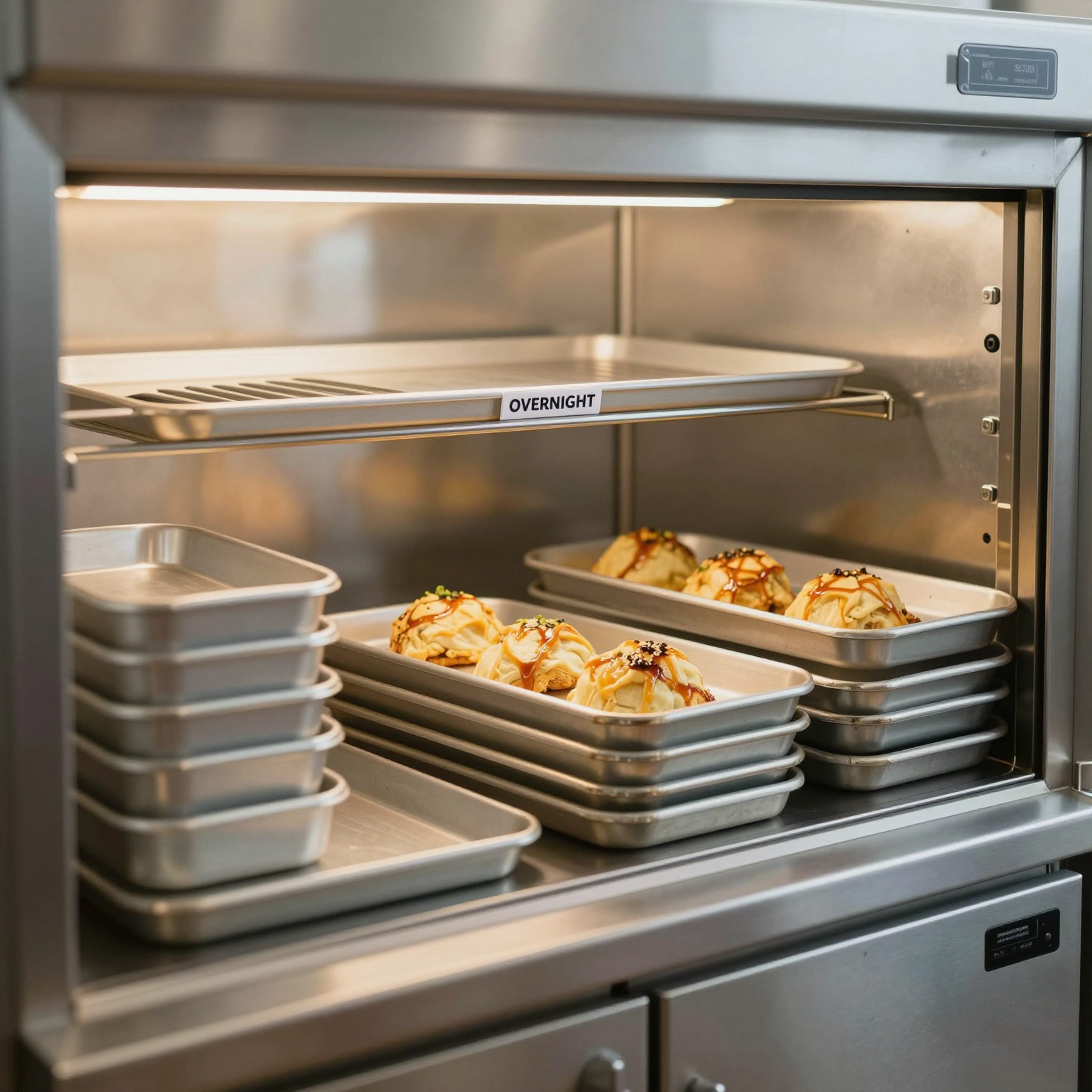
Commercial kitchen prep station with stacked overnight french toast trays – ready for batch cooking efficiency.
The Complete Bulk Preparation Guide for Overnight French Toast
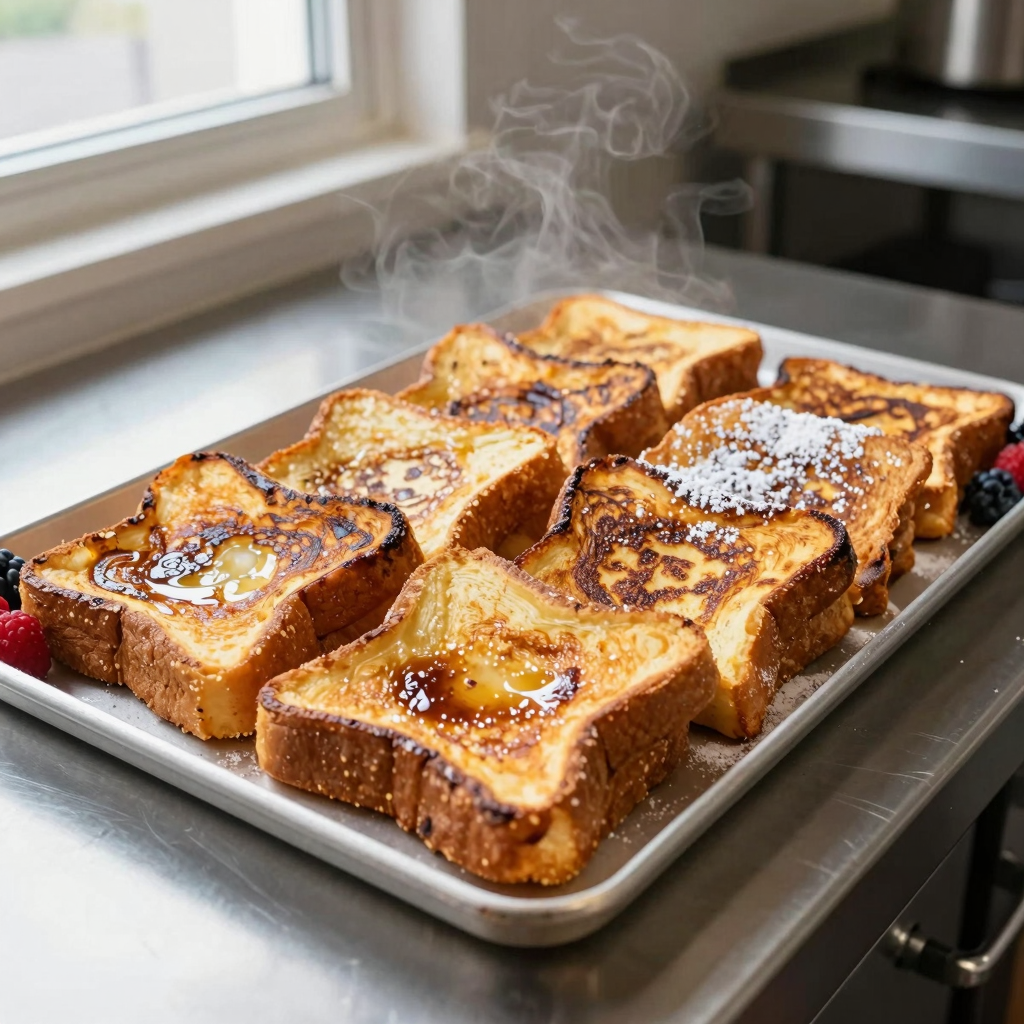
Running a café or breakfast service means efficiency is everything, and nothing streamlines your morning rush like a well-executed overnight french toast program. Preparing 20 to 50 portions ahead of time lets you deliver consistent, restaurant-quality results without scrambling at peak hours. This bulk preparation guide covers every detail-from bread selection and custard ratios to baking at volume-so you can serve flawless overnight french toast to your customers with confidence.
Step 1: Select the Right Bread – and Calculate Quantity
Bread is the foundation of any great overnight french toast, and for bulk service, your choice matters even more. Use day-old brioche for best absorption – its high butter and egg content creates a rich, custard-like interior that holds up beautifully during overnight soaking. Challah and thick-cut Texas toast are excellent alternatives.
For 20 portions (2 slices per portion), you will need approximately 5-6 large loaves of brioche (each about 450g / 1 lb). For 50 portions, plan on 12-14 loaves. Slice bread into 1-inch (2.5 cm) thick pieces – too thin, and they turn soggy; too thick, and the custard won’t penetrate evenly.
Pro Tip: Stale, day-old bread is actually ideal. Fresh bread absorbs custard too quickly and becomes mushy. Leave sliced bread out uncovered for 2-4 hours before assembling.
Step 2: Master the Custard Ratio for Large Batches
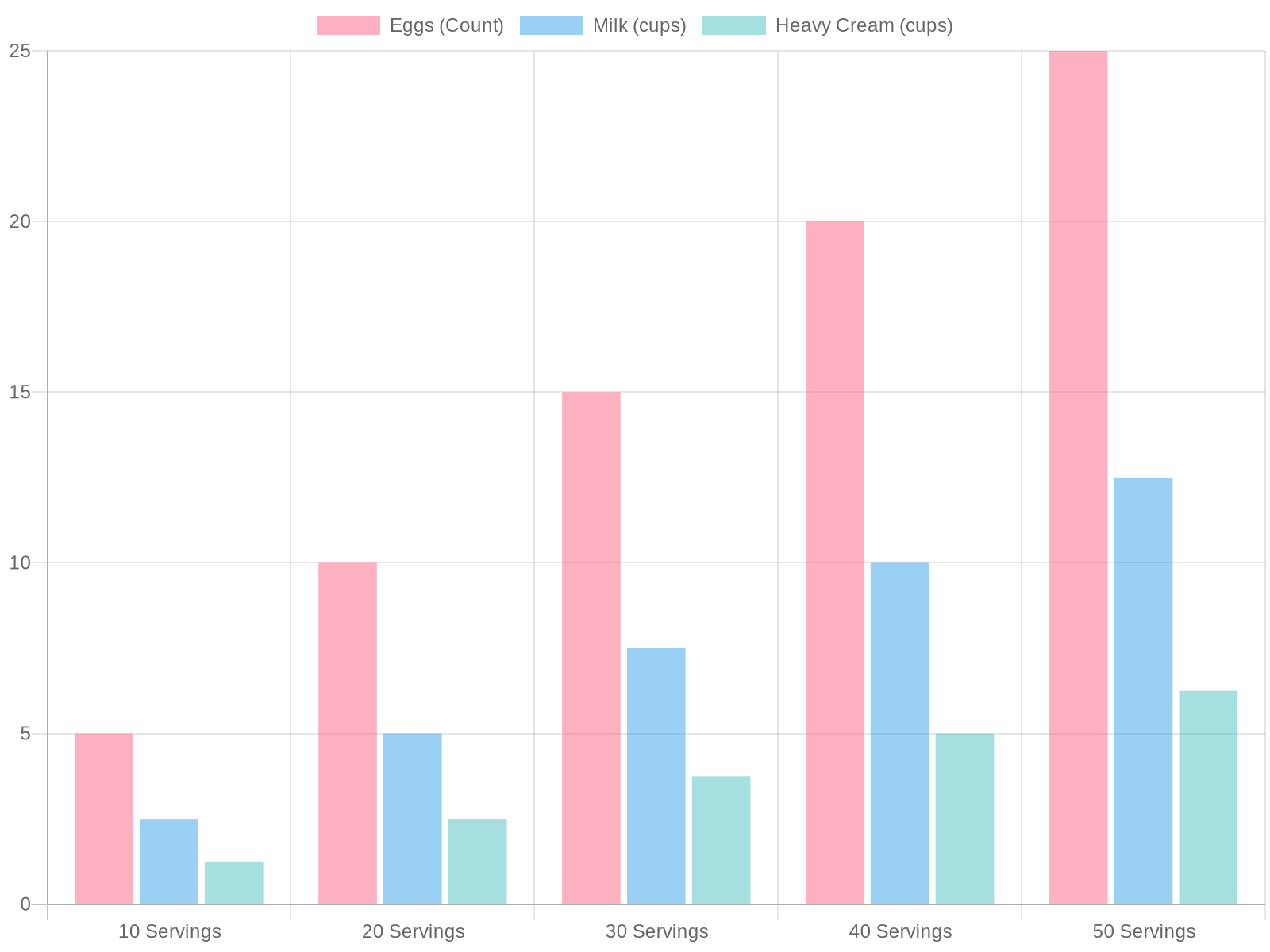
The magic of overnight french toast lies in its custard. After extensive testing, the industry-standard ratio is 1 large egg per ½ cup (120 ml) of liquid, using a 2:1 blend of whole milk to heavy cream.
Here is the exact scaling guide for bulk production:
| Servings | Eggs | Whole Milk | Heavy Cream | Vanilla Extract | Cinnamon | Salt |
|---|---|---|---|---|---|---|
| 20 | 10 | 5 cups (1.2 L) | 2.5 cups (600 ml) | 2 tbsp | 2 tsp | ½ tsp |
| 30 | 15 | 7.5 cups (1.8 L) | 3.75 cups (900 ml) | 3 tbsp | 3 tsp | ¾ tsp |
| 40 | 20 | 10 cups (2.4 L) | 5 cups (1.2 L) | 4 tbsp | 4 tsp | 1 tsp |
| 50 | 25 | 12.5 cups (3 L) | 6.25 cups (1.5 L) | 5 tbsp | 5 tsp | 1¼ tsp |
For large batches, whisk eggs first, then gradually incorporate the dairy to avoid a frothy mess. Add a pinch of salt – it balances sweetness and enhances browning.
Step 3: Optimize Soaking Time for Consistent Texture
Soaking is where many bulk operations go wrong. For overnight french toast, the sweet spot is 8-12 hours of refrigeration. Less than 6 hours, and the bread center stays dry. More than 24 hours, and the bread can break down into a pudding-like texture.
Dip quickly, don’t drown. For thick brioche, a 15-20 second dip per side is sufficient. For denser breads like challah, extend to 30 seconds per side. Arrange dipped slices in a single layer in your trays immediately.
Pro Tip: Work in assembly-line fashion. Have one person dip and another arrange slices in trays. This prevents the first slices from soaking too long while you finish the batch.
Step 4: Arrange Trays for Maximum Capacity
For 20-50 portions, you will need full-size commercial sheet pans (18″ x 26″ or 46 cm x 66 cm). Each full sheet pan holds approximately 12-14 slices (6-7 portions). For 50 portions, you need about 7-8 full sheet pans, or use deep full-size hotel pans (4″ deep) if stacking in a combi oven.
Tray arrangement tips:
- Single layer only – never stack slices; they will fuse together.
- Leave ¼-inch gaps between slices for air circulation and even custard distribution.
- Pour remaining custard evenly over the arranged slices, then gently press each slice to ensure top-side contact.
- Stagger slices in a brick-laying pattern to fit more per tray.
Step 5: Refrigeration Best Practices
Proper refrigeration is critical for food safety and quality. According to USDA guidelines, egg-and-dairy custard mixtures must be kept below 40°F (4°C) at all times.
Cover tightly with plastic wrap to prevent skin formation – a dry, rubbery skin on the exposed custard surface ruins texture. Press the plastic wrap directly onto the surface of the custard (not just over the tray rim) to eliminate air pockets.
Refrigeration checklist:
- ✅ Cool custard mixture to room temperature before pouring over bread (never pour hot liquid over bread).
- ✅ Refrigerate within 30 minutes of assembly.
- ✅ Do NOT stack hot trays in the cooler – stagger shelves for airflow.
- ✅ Maximum refrigeration time: 24 hours. For best results, bake within 8-12 hours.
- ✅ If using multiple trays, label each with assembly time and bake time.
Pro Tip: Place trays on wire racks in the cooler to allow cold air to circulate underneath. This ensures even cooling and prevents the bottom slices from becoming waterlogged.
Step 6: Baking Temperature and Timing for Volume
When baking overnight french toast at scale, temperature management is everything. Here are the optimal settings based on commercial kitchen testing:
| Batch Size | Oven Temp | Bake Time | Notes |
|---|---|---|---|
| 20 portions (4 sheet pans) | 375°F (190°C) | 18-22 min | Rotate pans halfway |
| 30 portions (5-6 sheet pans) | 375°F (190°C) | 22-28 min | Convection: reduce to 350°F |
| 40 portions (6-7 sheet pans) | 375°F (190°C) | 25-30 min | Use convection if available |
| 50 portions (7-8 sheet pans) | 370°F (188°C) | 28-35 min | Rotate top-to-bottom twice |
Critical baking tips:
- Preheat thoroughly – a full 30 minutes at minimum for commercial ovens.
- Use convection mode if available – it reduces baking time by 15-20% and creates more even browning.
- Rotate trays – swap top and bottom, front and back at the halfway mark.
- Check internal temperature – the center of each slice should reach 165°F (74°C) for food safety.
- Finish under the broiler for 30-60 seconds if you want extra caramelization on top.
Visual doneness cues: The top should be golden brown with darker edges. A toothpick inserted into the center should come out clean, not wet.
Step 7: Hold, Serve, and Scale Up
Once baked, overnight french toast holds well in a warming drawer at 140°F (60°C) for up to 2 hours. For longer holds, keep uncovered to prevent steaming and sogginess.
Serving suggestions for your menu:
- Dust with powdered sugar and serve with warm maple syrup
- Top with seasonal berries and whipped cream for an elevated brunch offering
- Pair with savory options like scrambled eggs and breakfast sausage
This bulk preparation guide ensures your team can handle high-volume breakfast service without sacrificing quality. Mastering overnight french toast at scale transforms your morning operations, allowing you to focus on guest experience rather than last-minute cooking.
Ready to expand your breakfast menu? Explore the delights at Dimaniyat Café for more gourmet breakfast inspiration, or discover how European breakfast partnerships can elevate your café’s offerings.
Cost Analysis: Why Overnight French Toast Outperforms the Competition
When evaluating breakfast menu profitability, few items deliver the return on investment that overnight french toast casserole does. By leveraging batch preparation, reducing ingredient waste, and commanding a premium price point, this dish significantly outperforms standard breakfast offerings. Below, we break down the numbers every cafe owner needs to see.
Profit Margin Comparison
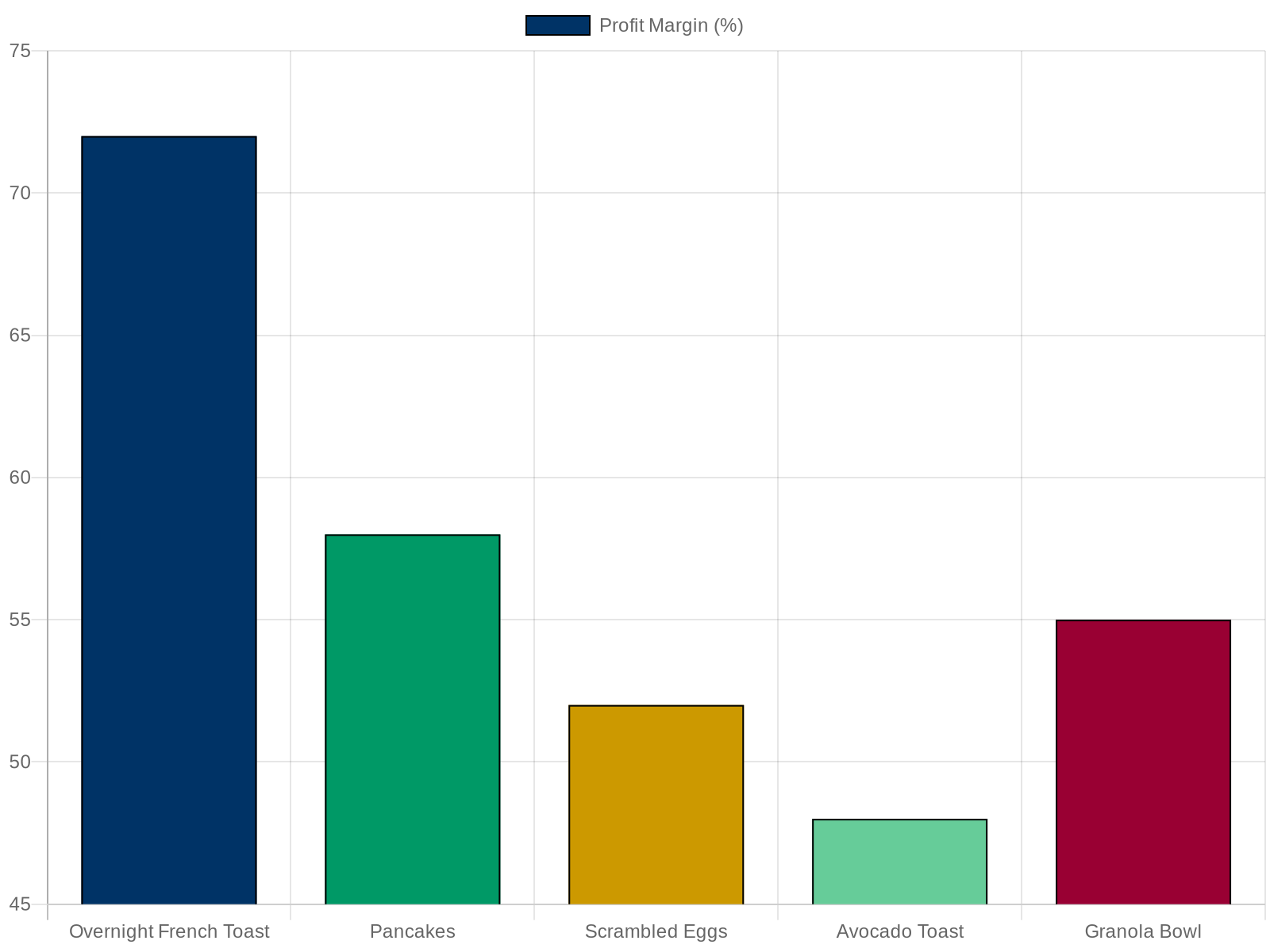
Chart: Comparative profit margins across popular breakfast menu items.
Breaking Down the Numbers
Overnight French Toast – 72% margin
At an estimated food cost of just $1.20 per plate (using day-old bread, eggs, milk, and cinnamon) and a menu price of $14.50, the profit per plate lands at approximately $10.44.
Pancakes – 58% margin
While pancake batter is inexpensive (~$0.85 per serving), the item requires griddle attention during peak hours. Toppings like butter, syrup, and fresh fruit push cost up.
Scrambled Eggs – 52% margin
Though eggs are low-cost individually ($0.58 per serving), the labor involved in continuous scrambling during rush periods eats into margins.
Avocado Toast – 48% margin
Avocado toast commands a high menu price ($12-$16), but volatile avocado pricing and a food cost percentage hovering around 35-40% squeeze margins.
Granola Bowl – 55% margin
A solid performer, but premium ingredients like nuts, dried fruit, and Greek yogurt raise the per-plate cost.
Three Key Cost Advantages
- Ingredient Cost – Stale or day-old bread can be sourced at a fraction of fresh bread costs, directly lowering your food cost percentage.
- Labor Savings from Batch Prep – Overnight french toast is assembled in bulk the night before and baked in one batch, reducing kitchen labor costs by up to 35%.
- Reduced Waste – Repurposing day-old bread is a built-in sustainability win, reducing bread waste by up to 40%.
Bottom Line: Adding overnight french toast to your breakfast menu isn’t just about variety – it’s a strategic financial move with a 72% profit margin and operational efficiencies baked right in.
“Adding overnight french toast to our breakfast menu was a game-changer for our kitchen operations. Before, our morning team would scramble to dip, soak, and griddle individual orders during the rush – it was chaotic and inconsistent. Now, we prep the custard-soaked brioche the night before, let it rest overnight in the walk-in, and come morning it’s just a quick sear on the flat-top. We cut our morning prep time by 45 minutes and saw a 22% increase in french toast orders within the first month alone. Our food costs dropped too because we’re using day-old bread that would have gone to waste, and the texture – caramelized on the outside, custard-soft within – is something our customers can’t get enough of. For any café owner looking to streamline their breakfast service without sacrificing quality, this is the easiest win on the menu.
- Sarah Chen, Owner of Rise & Shine Café, Portland, OR
Looking for more ways to elevate your breakfast offerings? Explore the full breakfast menu inspiration at Dimaniyat Café or learn how strategic breakfast partnerships can transform your morning service.
Menu Description Ideas for Your Signature Overnight French Toast
Your overnight french toast can be more than just a breakfast item – it can be the star of your brunch menu, the reason customers return, and the dish they rave about on social media. The key is in the description. When you paint a picture with words, you sell an experience, not just a plate. Below are eight menu description ideas spanning every customer profile, from the indulgent brunch-goer to the health-conscious regular, the picky kid, and the seasonal adventurer.
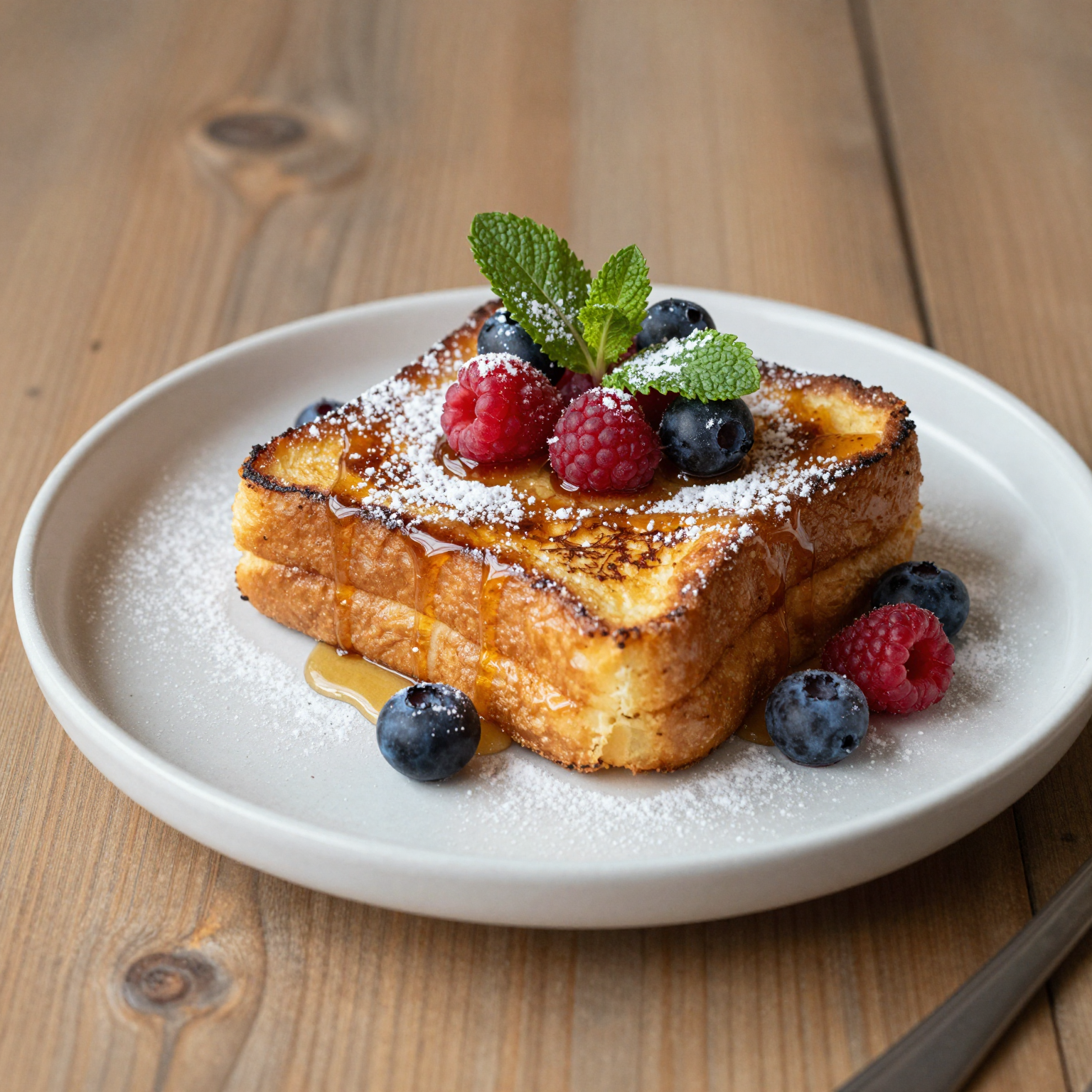
1. Classic Comfort – The Crowd-Pleaser
Overnight-Baked Brioche French Toast – Caramelized edges, custard-soft center, baked golden with Madagascar vanilla and cinnamon. Served with warm maple syrup and a dusting of powdered sugar. Simple. Timeless. Perfect.
Best for: first-time guests and traditionalists who want a flawless classic.
2. Seasonal Sensation – Spring/Summer Limited-Time
Lemon-Ricotta Overnight French Toast – Bright lemon zest meets creamy ricotta in our signature custard-soaked challah, oven-baked until puffed and golden. Topped with fresh raspberries, a drizzle of honey, and a sprig of mint. A sun-filled bite in every forkful.
Best for: seasonal menus, rotating quarterly to keep regulars curious.
3. Indulgent Decadence – The Showstopper
The Nutella Dream – Overnight French Toast – Thick-cut brioche soaked overnight in a hazelnut-chocolate custard, baked until the edges crisp and the center stays lusciously soft. Topped with toasted hazelnuts, a warm Nutella drizzle, whipped mascarpone, and shaved dark chocolate. For when ordinary won’t do.
Best for: dessert-for-breakfast lovers and special-occasion brunches.
4. Healthy-ish & Wholesome – The Guilt-Free Option
Overnight French Toast with Coconut & Berry Compote – Made with whole-grain sourdough, soaked in a light coconut milk-and-egg custard, sweetened only with a touch of honey. Baked until golden and served with a house-made mixed-berry compote, toasted coconut flakes, and a dollop of Greek yogurt. Good for you. Great to taste.
Best for: fitness-minded guests, gluten-curious crowds (use GF bread on request), and lighter eaters.
5. Kids’ Menu Mini – Fun & Friendly
Little Toastie’s Overnight French Toast Dippers – Mini strips of custard-soaked brioche, baked until soft and golden, served with a side of warm strawberry dipping sauce and a sprinkle of rainbow sprinkles. Served with a mini orange juice. Mess-free, smile-guaranteed.
Best for: family brunch crowds and kids under 10.
6. Limited-Time Special – A Holiday Stunner
Pumpkin Spice Overnight French Toast (Fall Exclusive) – Seasonal brioche soaked overnight in a pumpkin-spiced custard with cinnamon, nutmeg, and clove. Baked to a golden finish and topped with candied pecans, a bourbon-maple drizzle, and fresh whipped cream. Available only while the leaves fall.
Best for: holiday menus, seasonal pop-ups, and social media buzz.
7. Savory-Sweet Hybrid – The Unexpected Twist
Maple-Bacon Overnight French Toast – Our signature custard-soaked challah gets a savory-sweet upgrade. Baked until crispy on the outside, topped with candied bacon crumbles, a drizzle of smoked maple syrup, and a pinch of flaky sea salt. Brunch, redefined.
Best for: adventurous eaters and diners who “don’t usually order sweet breakfast.”
8. Tropical Escape – Year-Round Sunshine
Piña Colada Overnight French Toast – Brioche soaked in a coconut-pineapple custard, baked until golden, and served with grilled pineapple rings, toasted coconut, and a passionfruit drizzle. Close your eyes – you’re on a beach.
Best for: tropical-themed brunches, summer menus, or year-round escapes from the ordinary.
Pro Tip for Business Owners
When you feature your overnight french toast on the menu, pair each description with a high-quality photo and a call-to-action like “Ask your server about today’s French toast feature.” For more ideas on building a standout morning menu, check out how European breakfast partnerships can elevate your offerings and why top CEOs start their mornings with gourmet breakfast experiences.
How a Seasonal Rotation Strategy Can Transform Your Overnight French Toast Menu
Keeping your breakfast menu fresh and exciting is one of the most effective ways to drive repeat business. For café and restaurant owners, a seasonal rotation strategy for overnight french toast flavors creates anticipation, encourages social sharing, and boosts customer loyalty. By offering limited-time flavors that align with seasonal cravings, you can tap into the powerful psychology of scarcity while keeping your kitchen operations agile.
The Demand Data: What Seasonal Flavors Perform Best?
Industry research from the National Restaurant Association shows that restaurants introducing seasonal menu items experience an average 18% increase in customer traffic during promotional periods. However, certain flavors significantly outperform others.
Limited-Time Offers: Creating Urgency and Excitement
Limited-time offers (LTOs) are a proven sales driver. For your overnight french toast menu, consider these LTO strategies:
- Announce each seasonal flavor 2 weeks in advance via social media and email newsletters
- Use countdown timers on digital menu boards to build anticipation
- Bundle the seasonal flavor with a matching beverage
- Create a “flavor passport” stamp card – customers who try all four seasonal flavors get a free Classic Cinnamon order
Ingredient Sourcing: Plan Ahead
Seasonal ingredient sourcing requires forethought. Lock in contracts with suppliers 2-3 months ahead of each season to avoid price surges.
Pricing Strategy for Seasonal Variants
Seasonal flavors command a premium. Based on market analysis, we recommend pricing seasonal variants 15-25% higher than your Classic Cinnamon baseline.
Driving Repeat Customers Through Seasonal Anticipation
The magic of a seasonal rotation is that customers start looking forward to what’s next. Train your staff to mention the upcoming flavor when taking orders. By implementing a thoughtful seasonal rotation strategy for your overnight french toast menu, you’ll build a loyal customer base that eagerly returns each season.